

Working With AI, Not Just Using It
AI is already changing how work gets done. However, its real value will come not from automation alone, but more importantly from how effectively people and AI learn to work together. The organizations that get this right will not just move faster, they will make better decisions, unlock stronger talent potential, and build more resilient ways of working.
There is no shortage of conversation about AI right now. It is on leadership agendas, in product roadmaps, in board rooms, in investor discussions and increasingly in everyday decisions at work. But amid all this momentum, I believe one question deserves more attention:
Are we simply using AI, or are we learning how to work with it?
That distinction matters.
In many organizations, AI is still being approached primarily as a tool for efficiency - to automate repetitive tasks, improve speed, reduce manual effort, and surface insights faster. Those benefits are real. But the larger opportunity lies beyond efficiency.
Using AI is about applying a tool. Working with AI is about rethinking how work happens, how decisions are being made, how problems are solved, and how people and technology can bring out the best in each other.
Most Companies Are Using AI. Fewer Are Working With It.
Many organizations are already using AI in useful ways. They are automating tasks, summarizing information, improving workflows, and helping teams move faster. These are important starting points.
But using AI is not the same as transforming the way work gets done.
Working with AI means seeing it not as a replacement for people, but as a capability that can strengthen analysis, support better decisions, and make work more meaningful. It means moving beyond isolated use cases and asking a broader question: how can AI genuinely enhance human capability?
The AI Question Leaders Should Really Be Asking
Too often, the AI conversation gets pulled toward fear - especially the fear of replacement. Will AI replace certain tasks? Will it replace roles? Will it eventually replace people?
I believe that is the wrong place to begin. A better question is: How can AI help people do more of what they do best?
Because people bring the things that matter most: judgment, empathy, ethics, creativity, context, and trust. We understand nuance. We assess consequences. We make decisions based not just on information, but on experience and responsibility. AI brings something different. It brings speed, scale, pattern recognition, and the ability to process complexity quickly. When those strengths come together well, the outcome is not competition. It is partnership.
From Tool to Teammate
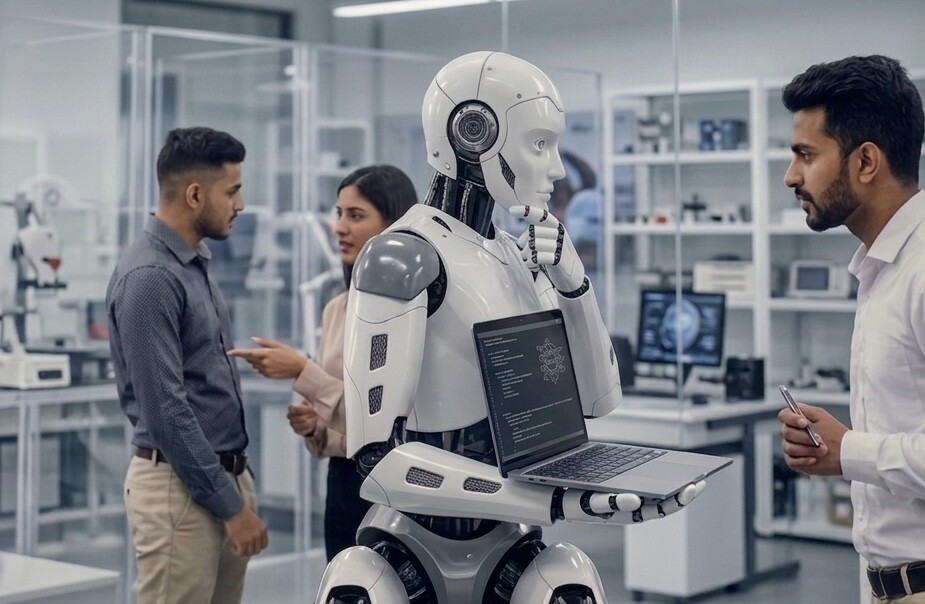
This is where I see the real opportunity à the shift from tool to teammate.
Not because AI becomes human, and certainly not because it takes over accountability. It does not. But it can become a meaningful collaborator in the flow of work, helping teams move faster where speed matters and think more deeply where judgment matters most. When that happens, people can spend less time on repetitive effort and more time on problem-solving, innovation, collaboration, and higher-value thinking.
That, to me, is where AI becomes truly powerful, not when it replaces human contribution, but when it strengthens it.
AI Should Make Us Better, Not Just Faster
One thing I feel strongly about is that speed alone cannot be the measure of success. AI should make us better, not just faster. Yes, efficiency matters. But the larger value lies in better analysis, better decisions, better use of time, and better outcomes. If AI only helps us do the same work faster, we are underselling its potential.
The real opportunity is to use AI in ways that improve the quality of work, not just the pace of it.
Leadership, Trust, and the Responsibility to Get This Right
One of the biggest challenges with AI is not just the technology itself. It is how people feel about it. If AI feels imposed, unclear, or threatening, people will naturally hold back. But if they see it as something that can support them, expand their capabilities, and help them grow, the conversation changes.
That is why leaders have such an important role to play. We must create space for curiosity, experimentation, and learning. We also must be honest about AI’s limitations. It is powerful, but it is not perfect. It needs oversight, clear guardrails, and people who know when to trust it, when to question it, and when human judgment must take the lead.
At Broadridge, where trust, resilience, and precision are so central to the work we do, this balance matters deeply. Innovation matters, but so does responsibility. AI can absolutely help accelerate work, but it must be used thoughtfully, securely, and in ways that build confidence.
Responsible AI cannot be a side conversation. It must be part of the core conversation.
The Real Opportunity Ahead
AI will increasingly become a natural part of everyday work, not in a dramatic or distant way, but in practical, integrated ways that gradually become part of how teams operate.
The organizations that will stand out will not necessarily be the ones using the most AI. They will be the ones that create the best partnership between people and technology — one that combines speed with judgment, innovation with responsibility, and efficiency with trust. So, I keep coming back to the same question:
Are we using AI, or are we working with it?
For me, the answer says a lot about how we think about leadership, talent, and the future of work. If we get this right, AI will not just help us move faster. It will help us think better, work better, and unlock more of what people are capable of.
And that, to me, is where the real opportunity lies.


Comments